
For each address the exact interpolation image is
When \(r>B_j\), a least period lists every residue in this coset modulo \(2^r\) exactly once. The following figure checks this assertion by exact arithmetic at precision \(256\).
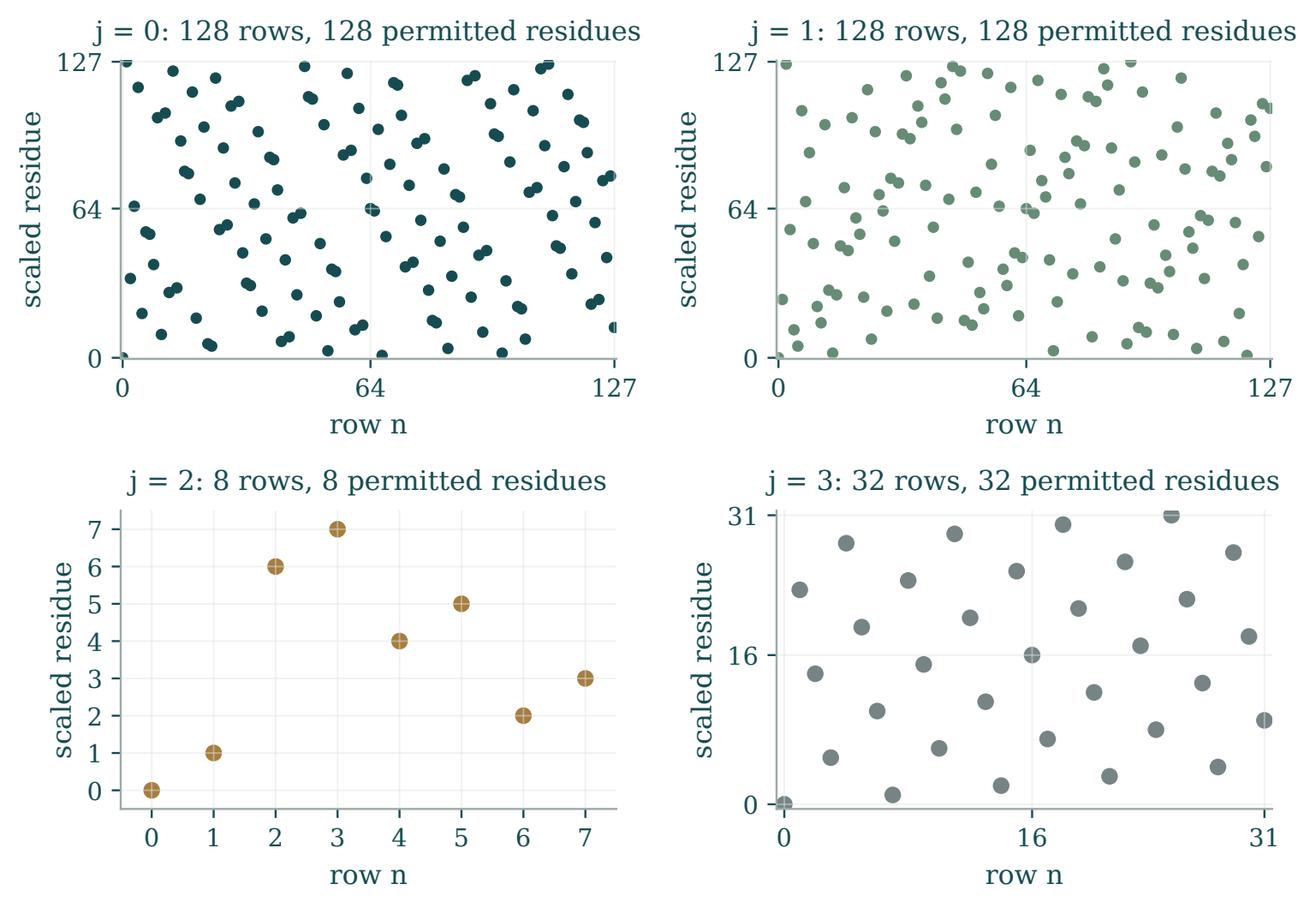
Reading the figure
The four panels have periods 128, 128, 8 and 32. The horizontal coordinate is row index over one full period. The vertical coordinate subtracts the address factorial and divides by the known power-of-two scale before reducing to the period. Every allowed scaled residue occurs once. The tables retain every plotted row, Euler residue and scaled residue.
| Row | Euler residue | Scaled residue |
|---|---|---|
| 0 | 1 | 0 |
| 1 | 255 | 127 |
| 2 | 69 | 34 |
| 3 | 131 | 65 |
| 4 | 233 | 116 |
| 5 | 39 | 19 |
| 6 | 109 | 54 |
| 7 | 107 | 53 |
| 8 | 81 | 40 |
| 9 | 207 | 103 |
| 10 | 21 | 10 |
| 11 | 211 | 105 |
| 12 | 57 | 28 |
| 13 | 247 | 123 |
| 14 | 61 | 30 |
| 15 | 187 | 93 |
| 16 | 161 | 80 |
| 17 | 159 | 79 |
| 18 | 229 | 114 |
| 19 | 35 | 17 |
| 20 | 137 | 68 |
| 21 | 199 | 99 |
| 22 | 13 | 6 |
| 23 | 11 | 5 |
| 24 | 241 | 120 |
| 25 | 111 | 55 |
| 26 | 181 | 90 |
| 27 | 115 | 57 |
| 28 | 217 | 108 |
| 29 | 151 | 75 |
| 30 | 221 | 110 |
| 31 | 91 | 45 |
| 32 | 65 | 32 |
| 33 | 63 | 31 |
| 34 | 133 | 66 |
| 35 | 195 | 97 |
| 36 | 41 | 20 |
| 37 | 103 | 51 |
| 38 | 173 | 86 |
| 39 | 171 | 85 |
| 40 | 145 | 72 |
| 41 | 15 | 7 |
| 42 | 85 | 42 |
| 43 | 19 | 9 |
| 44 | 121 | 60 |
| 45 | 55 | 27 |
| 46 | 125 | 62 |
| 47 | 251 | 125 |
| 48 | 225 | 112 |
| 49 | 223 | 111 |
| 50 | 37 | 18 |
| 51 | 99 | 49 |
| 52 | 201 | 100 |
| 53 | 7 | 3 |
| 54 | 77 | 38 |
| 55 | 75 | 37 |
| 56 | 49 | 24 |
| 57 | 175 | 87 |
| 58 | 245 | 122 |
| 59 | 179 | 89 |
| 60 | 25 | 12 |
| 61 | 215 | 107 |
| 62 | 29 | 14 |
| 63 | 155 | 77 |
| 64 | 129 | 64 |
| 65 | 127 | 63 |
| 66 | 197 | 98 |
| 67 | 3 | 1 |
| 68 | 105 | 52 |
| 69 | 167 | 83 |
| 70 | 237 | 118 |
| 71 | 235 | 117 |
| 72 | 209 | 104 |
| 73 | 79 | 39 |
| 74 | 149 | 74 |
| 75 | 83 | 41 |
| 76 | 185 | 92 |
| 77 | 119 | 59 |
| 78 | 189 | 94 |
| 79 | 59 | 29 |
| 80 | 33 | 16 |
| 81 | 31 | 15 |
| 82 | 101 | 50 |
| 83 | 163 | 81 |
| 84 | 9 | 4 |
| 85 | 71 | 35 |
| 86 | 141 | 70 |
| 87 | 139 | 69 |
| 88 | 113 | 56 |
| 89 | 239 | 119 |
| 90 | 53 | 26 |
| 91 | 243 | 121 |
| 92 | 89 | 44 |
| 93 | 23 | 11 |
| 94 | 93 | 46 |
| 95 | 219 | 109 |
| 96 | 193 | 96 |
| 97 | 191 | 95 |
| 98 | 5 | 2 |
| 99 | 67 | 33 |
| 100 | 169 | 84 |
| 101 | 231 | 115 |
| 102 | 45 | 22 |
| 103 | 43 | 21 |
| 104 | 17 | 8 |
| 105 | 143 | 71 |
| 106 | 213 | 106 |
| 107 | 147 | 73 |
| 108 | 249 | 124 |
| 109 | 183 | 91 |
| 110 | 253 | 126 |
| 111 | 123 | 61 |
| 112 | 97 | 48 |
| 113 | 95 | 47 |
| 114 | 165 | 82 |
| 115 | 227 | 113 |
| 116 | 73 | 36 |
| 117 | 135 | 67 |
| 118 | 205 | 102 |
| 119 | 203 | 101 |
| 120 | 177 | 88 |
| 121 | 47 | 23 |
| 122 | 117 | 58 |
| 123 | 51 | 25 |
| 124 | 153 | 76 |
| 125 | 87 | 43 |
| 126 | 157 | 78 |
| 127 | 27 | 13 |
| Row | Euler residue | Scaled residue |
|---|---|---|
| 0 | 1 | 0 |
| 1 | 51 | 25 |
| 2 | 253 | 126 |
| 3 | 111 | 55 |
| 4 | 25 | 12 |
| 5 | 11 | 5 |
| 6 | 213 | 106 |
| 7 | 135 | 67 |
| 8 | 177 | 88 |
| 9 | 99 | 49 |
| 10 | 45 | 22 |
| 11 | 31 | 15 |
| 12 | 201 | 100 |
| 13 | 59 | 29 |
| 14 | 5 | 2 |
| 15 | 55 | 27 |
| 16 | 97 | 48 |
| 17 | 147 | 73 |
| 18 | 93 | 46 |
| 19 | 207 | 103 |
| 20 | 121 | 60 |
| 21 | 107 | 53 |
| 22 | 53 | 26 |
| 23 | 231 | 115 |
| 24 | 17 | 8 |
| 25 | 195 | 97 |
| 26 | 141 | 70 |
| 27 | 127 | 63 |
| 28 | 41 | 20 |
| 29 | 155 | 77 |
| 30 | 101 | 50 |
| 31 | 151 | 75 |
| 32 | 193 | 96 |
| 33 | 243 | 121 |
| 34 | 189 | 94 |
| 35 | 47 | 23 |
| 36 | 217 | 108 |
| 37 | 203 | 101 |
| 38 | 149 | 74 |
| 39 | 71 | 35 |
| 40 | 113 | 56 |
| 41 | 35 | 17 |
| 42 | 237 | 118 |
| 43 | 223 | 111 |
| 44 | 137 | 68 |
| 45 | 251 | 125 |
| 46 | 197 | 98 |
| 47 | 247 | 123 |
| 48 | 33 | 16 |
| 49 | 83 | 41 |
| 50 | 29 | 14 |
| 51 | 143 | 71 |
| 52 | 57 | 28 |
| 53 | 43 | 21 |
| 54 | 245 | 122 |
| 55 | 167 | 83 |
| 56 | 209 | 104 |
| 57 | 131 | 65 |
| 58 | 77 | 38 |
| 59 | 63 | 31 |
| 60 | 233 | 116 |
| 61 | 91 | 45 |
| 62 | 37 | 18 |
| 63 | 87 | 43 |
| 64 | 129 | 64 |
| 65 | 179 | 89 |
| 66 | 125 | 62 |
| 67 | 239 | 119 |
| 68 | 153 | 76 |
| 69 | 139 | 69 |
| 70 | 85 | 42 |
| 71 | 7 | 3 |
| 72 | 49 | 24 |
| 73 | 227 | 113 |
| 74 | 173 | 86 |
| 75 | 159 | 79 |
| 76 | 73 | 36 |
| 77 | 187 | 93 |
| 78 | 133 | 66 |
| 79 | 183 | 91 |
| 80 | 225 | 112 |
| 81 | 19 | 9 |
| 82 | 221 | 110 |
| 83 | 79 | 39 |
| 84 | 249 | 124 |
| 85 | 235 | 117 |
| 86 | 181 | 90 |
| 87 | 103 | 51 |
| 88 | 145 | 72 |
| 89 | 67 | 33 |
| 90 | 13 | 6 |
| 91 | 255 | 127 |
| 92 | 169 | 84 |
| 93 | 27 | 13 |
| 94 | 229 | 114 |
| 95 | 23 | 11 |
| 96 | 65 | 32 |
| 97 | 115 | 57 |
| 98 | 61 | 30 |
| 99 | 175 | 87 |
| 100 | 89 | 44 |
| 101 | 75 | 37 |
| 102 | 21 | 10 |
| 103 | 199 | 99 |
| 104 | 241 | 120 |
| 105 | 163 | 81 |
| 106 | 109 | 54 |
| 107 | 95 | 47 |
| 108 | 9 | 4 |
| 109 | 123 | 61 |
| 110 | 69 | 34 |
| 111 | 119 | 59 |
| 112 | 161 | 80 |
| 113 | 211 | 105 |
| 114 | 157 | 78 |
| 115 | 15 | 7 |
| 116 | 185 | 92 |
| 117 | 171 | 85 |
| 118 | 117 | 58 |
| 119 | 39 | 19 |
| 120 | 81 | 40 |
| 121 | 3 | 1 |
| 122 | 205 | 102 |
| 123 | 191 | 95 |
| 124 | 105 | 52 |
| 125 | 219 | 109 |
| 126 | 165 | 82 |
| 127 | 215 | 107 |
| Row | Euler residue | Scaled residue |
|---|---|---|
| 0 | 2 | 0 |
| 1 | 34 | 1 |
| 2 | 194 | 6 |
| 3 | 226 | 7 |
| 4 | 130 | 4 |
| 5 | 162 | 5 |
| 6 | 66 | 2 |
| 7 | 98 | 3 |
| Row | Euler residue | Scaled residue |
|---|---|---|
| 0 | 6 | 0 |
| 1 | 190 | 23 |
| 2 | 118 | 14 |
| 3 | 46 | 5 |
| 4 | 230 | 28 |
| 5 | 158 | 19 |
| 6 | 86 | 10 |
| 7 | 14 | 1 |
| 8 | 198 | 24 |
| 9 | 126 | 15 |
| 10 | 54 | 6 |
| 11 | 238 | 29 |
| 12 | 166 | 20 |
| 13 | 94 | 11 |
| 14 | 22 | 2 |
| 15 | 206 | 25 |
| 16 | 134 | 16 |
| 17 | 62 | 7 |
| 18 | 246 | 30 |
| 19 | 174 | 21 |
| 20 | 102 | 12 |
| 21 | 30 | 3 |
| 22 | 214 | 26 |
| 23 | 142 | 17 |
| 24 | 70 | 8 |
| 25 | 254 | 31 |
| 26 | 182 | 22 |
| 27 | 110 | 13 |
| 28 | 38 | 4 |
| 29 | 222 | 27 |
| 30 | 150 | 18 |
| 31 | 78 | 9 |
Selectable labels from the original PDF
Native PDF text retains the figure’s extraction order. Equations and data tables above provide the reading order.
0 64 127
row n
0
64
127
scaled residue
j = 0: 128 rows, 128 permitted residues
0 64 127
row n
0
64
127
scaled residue
j = 1: 128 rows, 128 permitted residues
0 1 2 3 4 5 6 7
row n
0
1
2
3
4
5
6
7
scaled residue
j = 2: 8 rows, 8 permitted residues
0 16 31
row n
0
16
31
scaled residue
j = 3: 32 rows, 32 permitted residues
Original figure caption
Exact residue permutations modulo \(256\). The vertical coordinate is \(y_n=(E_{4n}^{(4,j)}-j!)/2^{B_j}\) modulo \(P_j(8)\). Each panel contains one full least period; every vertical residue occurs once.
No decimal approximation is used to form these residues. The generating series is inverted modulo \(2^{256}\) using odd denominators, then the exact result is reduced modulo \(256\). An independent rational inversion checks the initial coefficients.
The shapes are permutations, not monotone real functions. Their organizing property is dyadic distance: agreement in input low bits forces the same agreement in the scaled output low bits.